North America: One Trade Bloc?
The Prospective Atlas presents a clear vision of Mexico's potential as an industrial leader in North America.
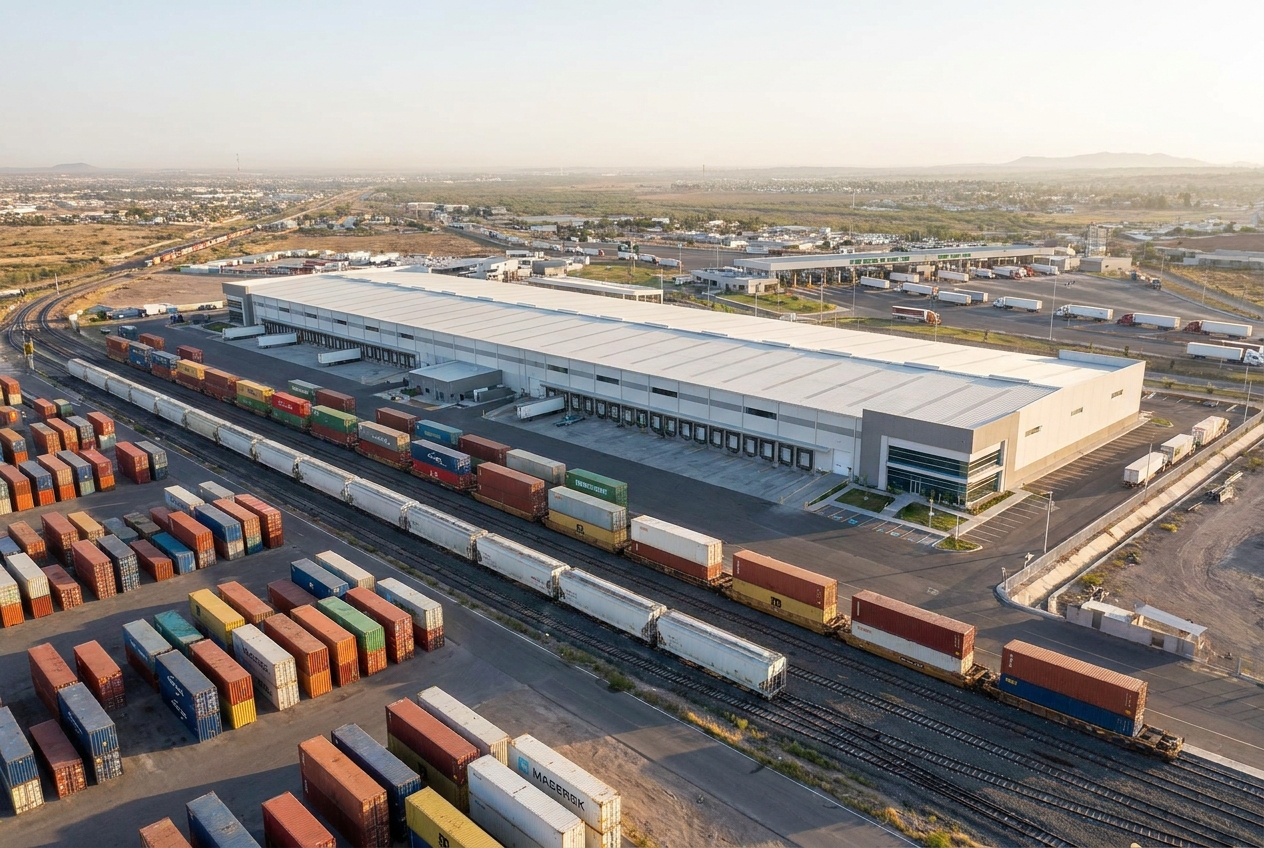
The Mexican government faces the major challenge of keeping the country on a path of growth and distributive prosperity. Meanwhile, trade threats and the reconfiguration of global value chains demand a rethinking of how Mexico integrates into the regional economy. What comes next? Are we far from following the template of the European Steel Union?
As part of my work developing the Prospective Territorial-Industrial Atlas for Investment Attraction, in collaboration with UN-Habitat and the United Nations Industrial Development Organization (UNIDO), I have analyzed strategies to strengthen Mexico's economy. This effort aims to attract investment and boost key sectors including pharmaceuticals, aerospace, energy, and petrochemicals.
In June 2023, I had the opportunity to speak with various American leaders in the steel sector. The concern was real. Mexico could never have increased its steel production by 1,700% in a single year. Deploying technology at customs to overhaul its operations was indispensable.
One of the most successful models of economic integration has been the European Customs Union, which enabled industrial growth, investment, and stronger intra-regional trade. This raises a crucial question: could a customs union with the United States generate similar benefits for Mexico?
Key Benefits
Challenges to Consider
• Formalizing the loss of trade sovereignty Mexico has been carrying since the Salinas era? Mexico would need to align its tariffs with the U.S., limiting its ability to negotiate independent agreements with other trading partners.
• Once again leaving agriculture and other industries at the mercy of "the market"? Competition from heavily subsidized U.S. agricultural products could harm Mexican producers.
• Matching wages and putting Mexican unions in direct competition with their American counterparts? Meeting stricter labor and environmental standards could increase operating costs for some industries.
A Strategic Opportunity for Mexico? Possibly the best path to consolidating our vision of national prosperity.
The Prospective Atlas presents a clear vision of Mexico's potential as an industrial leader in North America. Based on this document, it became clear to me that a well-negotiated customs union could reinforce investment, strengthen supply chains, and improve the country's competitiveness, just as it did in Europe.
The challenge is to carefully weigh the costs and benefits to ensure this strategy drives economic development in a sustainable and equitable way.
Is Mexico ready to take this step in its economic evolution?
References: Since 2014, Mexico's SAT has been aligning with the U.S. on customs security and merchandise transit. https://portales.sre.gob.mx/mex-eua/images/stories/PDF/SICOCAN/FirmaEstadosUnidosyMexicoacuerdodereconocimientomutuoenmateriaaduaneraunicoenelmundo.pdf
José Romero from Colmex also evaluated this:
https://repositorio.colmex.mx/concern/articles/ns064661q?locale=es
Criticism of the Mexican Government's performance. https://www.scielo.org.mx/scielo.php?pid=S1665-952X2010000100002&script=sci_arttext
Frequently Asked Questions
What is the Prospective Territorial-Industrial Atlas?
A strategic document developed in collaboration with UN-Habitat and UNIDO to identify investment opportunities and strengthen key industrial sectors in Mexico, including pharmaceuticals, aerospace, energy, and petrochemicals.
How would a customs union with the U.S. affect Mexico's trade sovereignty?
Mexico would need to align its tariffs with U.S. policy, limiting its ability to negotiate independent trade agreements with other partners and formalizing trade constraints that have existed since the Salinas era.
What lessons does the European Customs Union offer for North America?
The European model enabled industrial growth, cross-border investment, and stronger intra-regional trade. A comparable arrangement in North America could reinforce supply chains and boost Mexico's competitiveness, provided the costs to agriculture and labor are carefully managed.