Artificial Intelligence: The Energy Infrastructure of the 21st Century
Artificial intelligence is redefining global infrastructure by driving a rapid acceleration in energy demand. This represents a strategic opportunity for Mexico: integrating energy, data, and planning into a single development vision. The piece analyzes how the country can get ahead of the curve and convert this trend into a competitive advantage through coherent public policy.
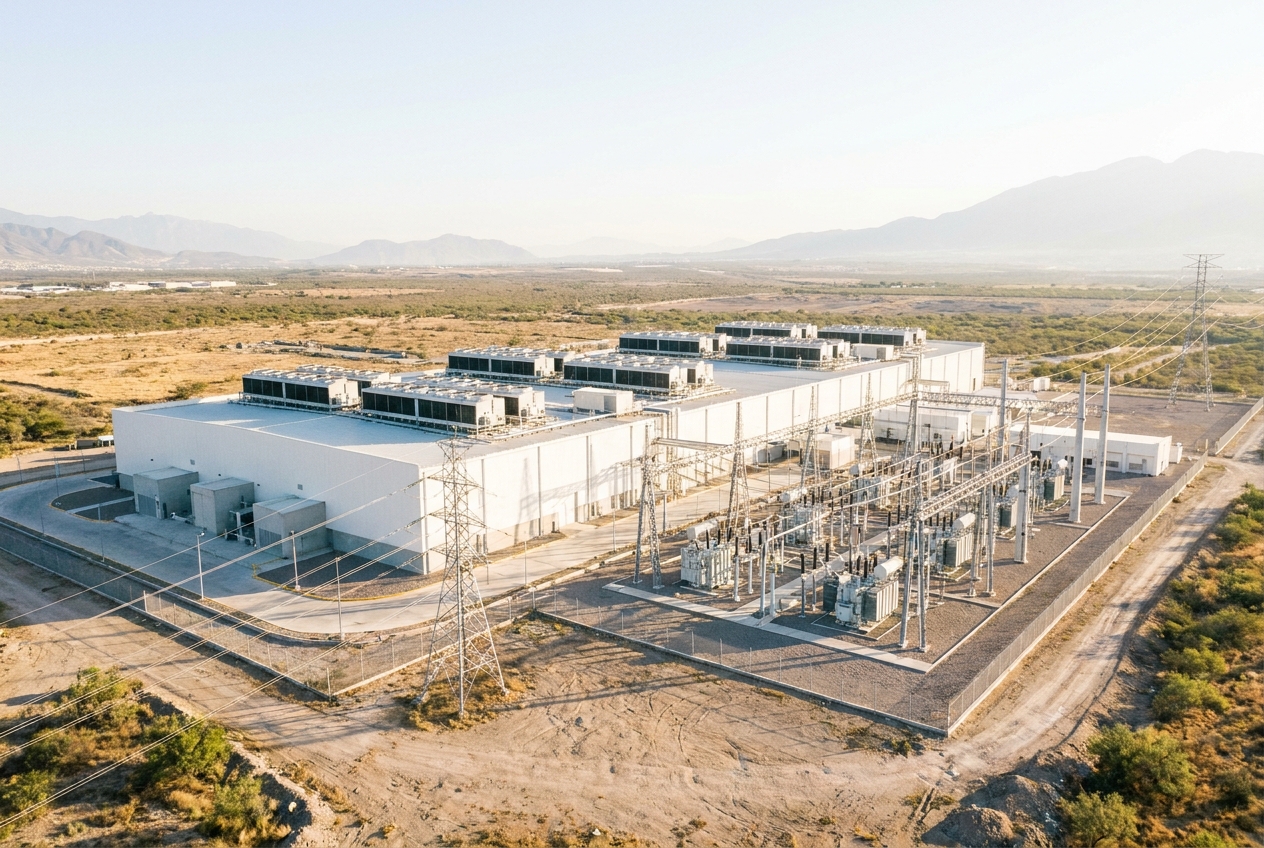
The global energy landscape for AI data centers is defined by a "hyperscale demand shock," where physical grid constraints have become the primary bottleneck to technological progress. Major economies have adopted divergent strategies to ensure continuous power supply. The United States, leading in investment, is betting on aggressive infrastructure expansion through public-private partnerships, prioritizing the co-location of data centers with advanced nuclear plants to circumvent delays in transmission line construction. By contrast, China applies a centralized, state-directed "AI+ Energy" integration model aimed at securing grid stability and manufacturing supremacy through mandatory development of sovereign Large Language Models (LLMs) for managing its electrical grid and key sectors such as coal and gas. The European Union, for its part, focuses on regulatory harmonization, sustainability, and cross-border resilience, funding the development of a Generative AI-powered "digital backbone" for its energy system.
Other nations are taking specific steps to modernize their infrastructure and ease grid pressure. Japan is investing up to $100 billion in Small Modular Reactors (SMRs) and subsidizing distributed GPU architectures such as NeoCloud to secure hardware supremacy and reduce localized energy bottlenecks. Similarly, South Korea has tripled its AI budget to accelerate the deployment of a national "AI grid" and boost self-sufficiency in advanced power semiconductors (SiC and GaN), essential for managing high energy densities. The UAE stands out by positioning itself as a global AI hub through the creation of a 5-gigawatt campus, leveraging sovereign capital and a strategic mix of nuclear, solar, and gas energy. This global response is crystallizing into a geopolitical schism: Western approaches rely on private venture capital and market optimization, while Asian strategies depend on massive state-directed mandates focused on centralized grid control and outright hardware supremacy.
Artificial intelligence and energy have moved beyond a purely digital revolution; they now represent a large-scale physical transformation. In 2026, companies such as Microsoft, Google, and Amazon have accelerated data center investments, with annual global capacity growth of roughly 25-30%, according to the International Energy Agency (IEA) in a 2025 report and sector estimates compiled by McKinsey in 2024. Each of these complexes can consume as much electricity as tens of thousands of homes. The conclusion is unambiguous: AI is not only programmed, it is powered. The challenge is clear: if this expansion unfolds without planning, it will generate electrical bottlenecks and severe grid strain.
This phenomenon also opens a strategic opportunity. In North America, electricity demand tied to data centers is projected to grow at double-digit rates in the coming years, according to energy and technology sector forecasts. Mexico holds instruments such as PRODESEN and PLADESE that allow it to anticipate this demand and manage its integration in an orderly fashion. This binding planning capacity is a competitive advantage: it aligns digital investment with energy expansion, prevents improvisation, and delivers certainty for electricity-intensive projects.
The next stage requires clear action: converting this trend into articulated public policy. This means defining strategic zones for data centers with guaranteed energy capacity, incorporating CFE as a structural partner in high-consumption projects, and linking digital permits to compliance with electrical criteria. Tools such as the Digital Investment Window can facilitate the arrival of capital without sacrificing order. The opportunity is not merely to attract investment, but to direct it. In this new economy, the advantage will belong not to those with the most technology, but to those who can sustain it. Mexico today has the instruments to do so.
Frequently Asked Questions
Why does artificial intelligence drive such high energy demand?
Modern AI systems, particularly large language models and data centers, require enormous amounts of continuous electricity for computation and cooling. A single hyperscale data center can consume as much power as tens of thousands of homes, creating what the industry calls a hyperscale demand shock on electrical grids.
How can Mexico position itself strategically in the AI energy race?
Mexico can leverage existing planning instruments such as PRODESEN and PLADESE to designate strategic zones for data centers with guaranteed energy supply, incorporate CFE as a structural partner in high-consumption projects, and link digital permits to electrical compliance criteria. The Digital Investment Window can further streamline capital attraction without sacrificing orderly grid management.