Artificial Intelligence and Electricity: The New Demand Mexico Can Anticipate
Artificial intelligence is reshaping the digital economy, and in doing so it is redefining global electricity demand. Behind every model and platform sit data centers that require constant power. For Mexico, this trend is not a risk but a strategic opportunity: anticipate the growth in electricity consumption and turn it into a driver of technological development, infrastructure, and competitiveness.
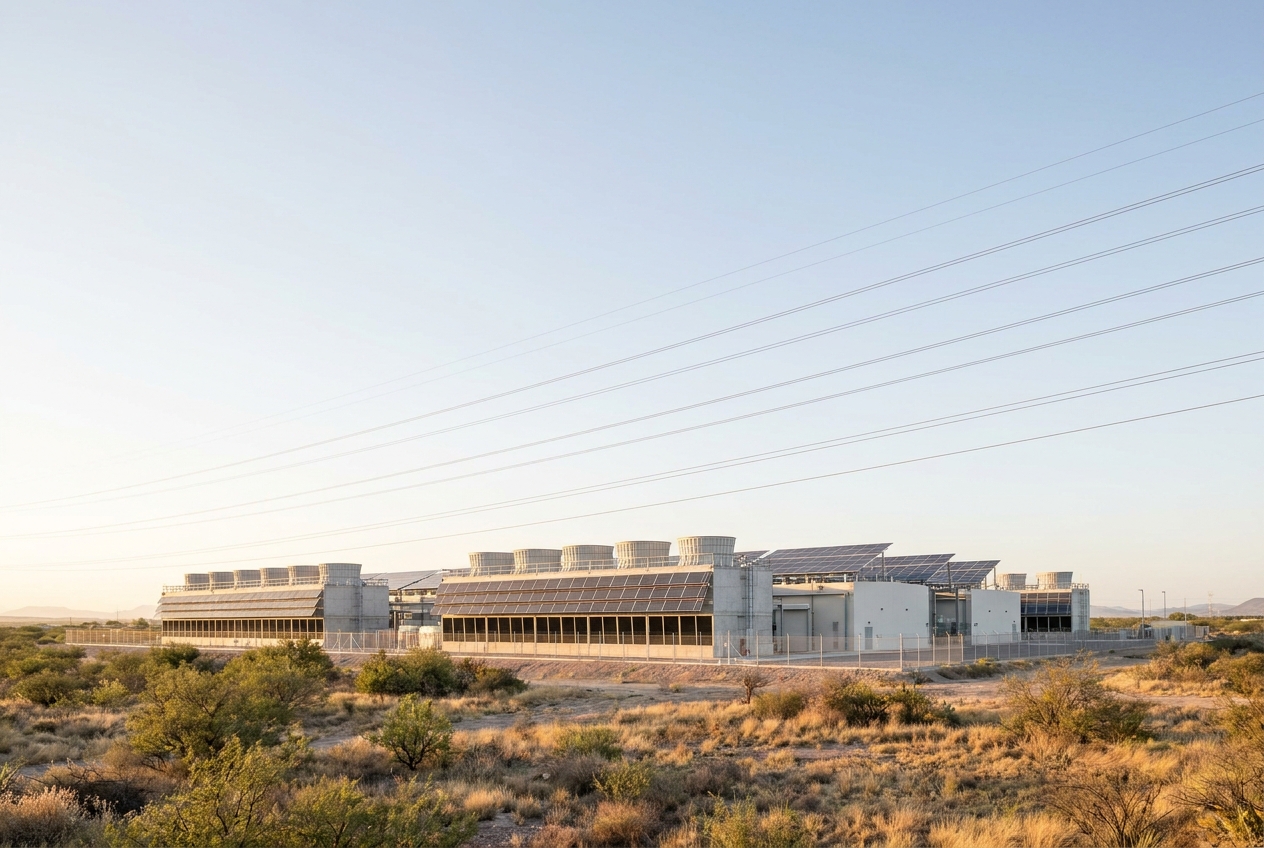
Artificial intelligence is transforming the global economy at a speed rarely seen before. Models capable of processing millions of data points, training complex algorithms, and delivering advanced digital services have become the invisible infrastructure of the contemporary economy. Yet behind every query, every trained algorithm, and every automated system lies a physical reality that rarely receives the depth of attention it deserves: the enormous quantity of electricity this new technological revolution demands.
Artificial intelligence does not live in the cloud; it lives in data centers. And those data centers are, in essence, large energy consumers.
The servers that run language models, image recognition systems, and large-scale data analytics tools operate around the clock. Beyond the computing itself, they require cooling systems, electrical redundancy, massive storage, and permanent connectivity. Taken together, this technological ecosystem is beginning to reshape energy consumption patterns worldwide.
This phenomenon should not be understood as a problem but as a clear signal of where the knowledge economy is heading. Just as twentieth-century industrialization raised electricity demand in factories, railways, and cities, the advanced digitalization of the twenty-first century is creating a new category of energy consumer: artificial intelligence infrastructure.
For countries with strategic vision, this shift represents an extraordinary opportunity.
Mexico is in a privileged position to anticipate this new phase of technological development. The strengthening of energy planning driven by the Mexican government makes it possible to integrate digital expansion into a coherent, long-term national energy architecture.
The key is understanding that digital infrastructure and energy infrastructure must grow together.
When the state plans the expansion of the electrical grid, the construction of new power plants, and the strengthening of transmission capacity, it is not only guaranteeing electricity for households and traditional industries. It is also creating the conditions for new computing-intensive industries, including artificial intelligence, data centers, and the digital economy, to develop in an orderly and sustainable way.
This planning approach is particularly relevant because energy demand is already changing. Electricity planning documents such as the PRODESEN project steady growth in the country's electricity consumption, driven by industrial expansion, transportation electrification, and technological development.
Mexico: Connected by Energy
Artificial intelligence now enters that equation.
In the coming years, technology companies, universities, research centers, and digital platforms will increase their data processing and storage needs. This will mean higher electricity demand, but also new opportunities for the national economy: investment in data centers, development of specialized talent, technology supply chains, and advanced digital services.
Mexico stands to gain enormously from this transition if it maintains an integrated vision linking energy policy and technology policy.
State stewardship of the electrical system, backed by sound technical planning, enables precisely that: anticipating future demand and directing infrastructure toward the strategic sectors of development. As has happened at other stages of national growth, energy becomes once again the quiet foundation of innovation.
Artificial intelligence may appear intangible, but its impact is profoundly material. It requires cables, networks, data centers, cooling systems, and above all, reliable electricity.
The relevant question, then, is not whether artificial intelligence will consume a great deal of energy. It is this: are we ready to harness that new demand as a driver of development?
Mexico today has the opportunity to answer yes. With modern energy planning, with institutions that coordinate the expansion of the electrical system, and with a state digital transformation strategy underway, the country can position itself as a relevant technology hub in North America.
If the industrial revolution was built on coal and steel, the digital revolution is built on data and electricity.
And on that new map of development, energy is once again the starting point for the future.
Frequently Asked Questions
How does artificial intelligence increase electricity demand?
AI systems require data centers that operate around the clock, consuming power not only for computation but for cooling, redundancy, and storage. This makes them among the most energy-intensive facilities in the modern economy, with demand growing as AI adoption accelerates.
What strategic opportunity does AI energy demand create for Mexico?
Mexico can position itself as a North American technology hub by aligning national energy planning with the infrastructure needs of the digital economy, attracting data center investment, building specialized talent pipelines, and developing advanced digital services.
What is the PRODESEN and why is it relevant to AI infrastructure?
The PRODESEN is Mexico's official electricity sector development program. It projects steady growth in national electricity consumption and provides the planning framework within which new digital demand, including AI infrastructure, can be systematically anticipated and accommodated.